The film Di’Anno: Iron Maiden’s Lost Singer was a labour of love for director Wes Orshoski. The film is at times bleak and brutal, but it covers the entire spectrum of human emotion. For Wes, who also made the films Lemmy and The Damned: Don’t You Wish That We Were Dead, the process of covering Paul Di’Anno was “definitely the most difficult” experience so far.
“I only signed on to make it over 12 months,” Wes told MetalTalk Editor Steve Ritchie. “It will have been nine years from the time I signed the contract to the release date.”
Di’Anno: Iron Maiden’s Lost Singer is a film for Metal fans and not just Iron Maiden diehards. With contributions from James Hetfield, Gary Holt, David Ellefson, Andreas Kisser, Bobby Blitz, Blaze Bayley, the film is more than a “taking heads” film, as it covers the very difficult and personal hell Di’Anno was going through.
From the outside, it looks as if, when Wes first meets Paul, the arc was already there to push the film forwards. But this is certainly not the case.
“When I first spoke to Paul, it was about one month before I met him,” Wes said. “He made me believe that he was going to be on his feet again in a month and a half. He completely lied to me. The first time I met him, you see it in the film, is when he is dropped off at the Salisbury District Hospital. Within an hour, I’m in that room, and his doctors are telling him that he may lose the leg and he could even die on the table.”
Wes says he wondered what he had got himself into. “This guy is not going to be walking anytime soon. I didn’t want to make a talking heads historical documentary. If I can’t film him doing anything, what do I have?”
The long saga of the film began. There were delays, “largely due to his health, him missing appointments and going to the back of the line in the NHS. Then COVID. In the end, I’m very thankful for all the delays because it gave me something I feel like I haven’t seen before in the music documentary world.”
The film is harrowing, and you appreciate how someone with those health and mobility issues would have mental health problems. You see Paul Di’Anno at his most vulnerable, and the loss of dignity is striking.
“The scene that I struggled with was when a crowdfunding campaign had started, and Stjepan Juras convinces him to come to Zagreb, Croatia, where he could make the money stretch and get really world-class healthcare. Paul Di’Anno starts to leave Salisbury and travels to Croatia.
“He can’t fly because his leg is too big. So he had to take a car to Dover, get on the ferry, and transfer to an ambulance in Calais. I filmed him transferring from that wheelchair to a stretcher, and man, I was really questioning my morality then.
“I was really questioning what I was doing. At the same time, I’m praying that nothing fails in my camera, the card or the battery, because it had such an effect on me. I knew what I was witnessing was special. This is one of the worst moments in Paul’s life. You see him in the ambulance saying I’m scared and he’s trembling.”
Doctors in England had removed his knee joint and put in a spacer with medical cement. “He couldn’t lift his leg, so he was terrified that he would fall, the knee would be destroyed, and the leg would be destroyed. So this is a little window into his kind of state of mind at the time. Any time that he felt off balance, he was terrified.”
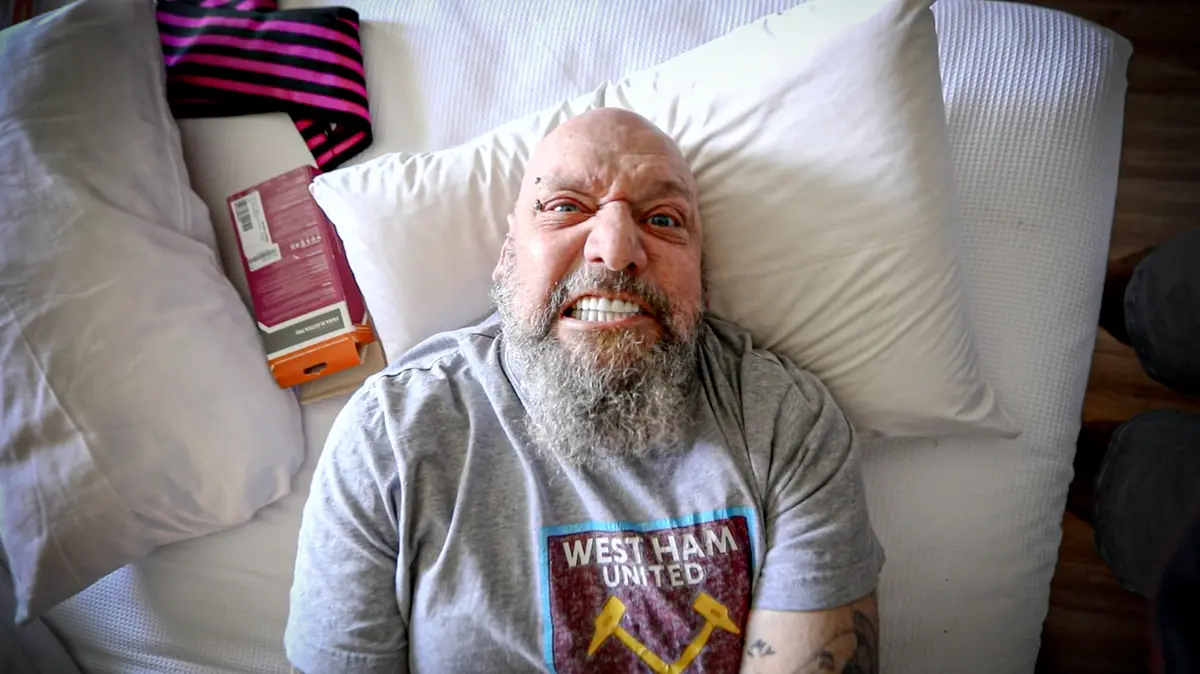
To understand how Paul ended up in that ambulance, you have to go back to where the film started. When Wes agreed to make the film in 2017, Paul Di’Anno was mostly housebound, watching TV most of the time. “Occasionally, he would ask the cab driver to come and pick him up, so he could go to the pub to have a pint. I never really saw him have more than one beer. Then he would go back home and would be on Facebook all day talking about the football score or episodes of The A-Team or his sandwich. It was really mundane.
“So I had to dream up things that I could create to film something interesting for him to do. That’s how the Chat And A Pint interview with Malcolm Dome at The Cart & Horses happened. That’s how he sits in with the Iron Maidens. He hadn’t really left his house in a long time, as he was really unsure about it all.”
Even though Wes had a documentary to make, at this time the human side meant that Wes was helping Paul. “I realised at the end of that trip I’m missing the whole story,” Wes said. “I should have somebody helping him. I should hire a nurse because if I’m helping him in and out of the car, you’re not feeling anything for the guy. You’re not experiencing what he’s experiencing.”
For the journey to France, Paul Di’Anno was expecting Wes to help again. “I had to strategically cut around him screaming at me. There’s a scene in the film where the first thing the doctor in Croatia did was order X-rays. So Paul had to go across town and get some X-rays. When they’re lifting him onto that X-ray table, I’m cutting around him, screaming at me to help out. But I would just let him scream at me because from this point on, I was not gonna help him. I wasn’t going to push his wheelchair. I wasn’t going to lift him because I was missing the whole film.”
The X-ray scene is brutal, because you see in full detail the state of Paul Di’Anno’s knee. There is nothing there. No joint, just two pieces of bone with a gap between them. “It was shocking,” Wes says. “You saw how his lower legs had slipped behind his upper legs, and it made perfect sense why he couldn’t extend his leg. He couldn’t stand up.”
Watching the film, at this point you realise how Paul’s condition had made him a prisoner. “I mean that is a good word,” Wes says.
There is real optimism when they arrive in Croatia. The pain must have been horrific. As Wes says, it felt like Paul Di’Anno was “really on the cusp of something. 1000%.”
Hired by Matt Green of Cleopatra Records to make the film, there was a lot of support from Cliff Evans, who was part of the Killers lineup and made a lot of things happen behind the scenes. “I’d have regular calls with Cliff and Matt,” Wes says, “and the whole dream that all three of us had was that Paul would stand up at one point.
“The dream was that at the end of the film, when I go with him to Brazil, even just for one song, the last song, he would rise up out of that wheelchair. Even with a frame. But when he got to Brazil, I realised that he had regressed and it wasn’t going to happen.”
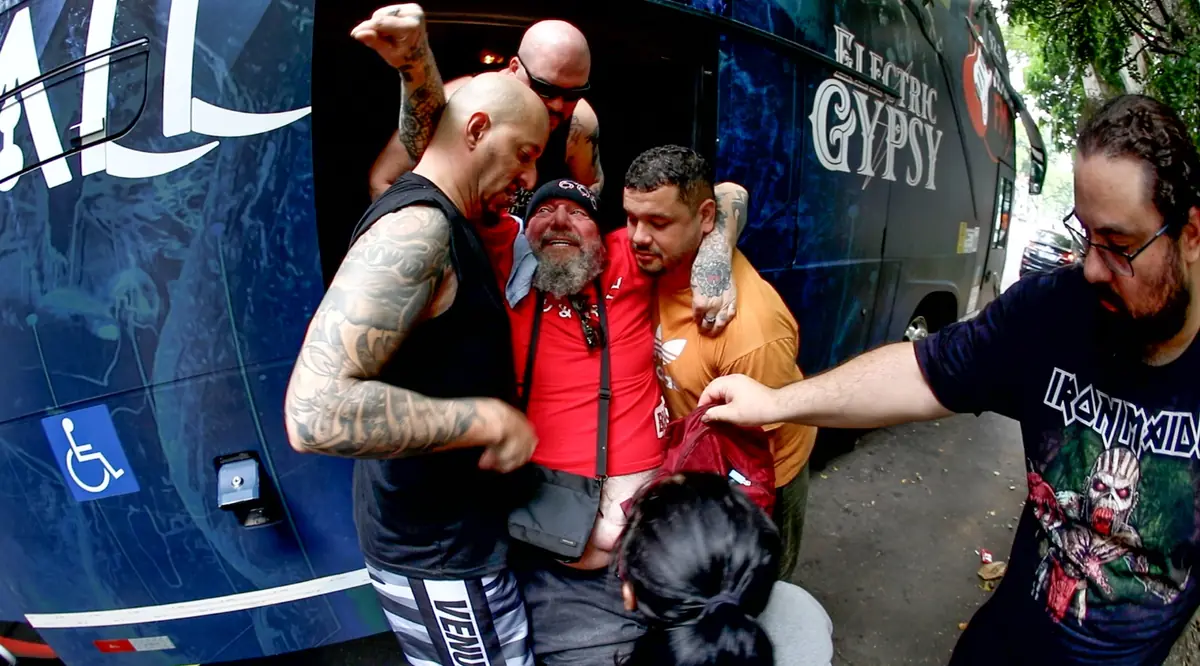
Go back to the start, though, and Wes and Paul were still strangers to each other.
The first meeting between Wes Orshoski and Paul Di’Anno was at the pub in Salisbury, which is cut into the film at several points. Paul was embarrassed by inviting Wes to his home. “He’s really braggadocious, macho, and matter-of-fact when he would tell stories and recount things. But it felt like we were at a distance.”
Here, Wes was wondering how the film would progress. “I can’t have him talking to me with this emotional wall not breaking down,” Wes said. “I guess one of the good things over the years was I spent so much time working on the film with him that we got to become friends.
“The last interview I did with him in Croatia, he was so real, and I’m so proud of that. I love seeing that interview because he’s so happy. He’s happy. He’s in love. He’s going to Brazil. He’s got the surgery. Things are so up. He’s got new teeth. He’s so full of joy, and he’s honest about everything.”
There was no more distance. Wes left Paul in Croatia in November 2022 and would not see him again until January 2023. “In that time he went to Greece to play a couple of gigs with Gus G. They did each of the first two Iron Maiden albums. Then he did a gig in Germany, and then he went back to England.
“But he hadn’t set up regular care for himself. There was nobody to look after him. So when he got to Brazil, it was bad.”
Wes remembers the Croatia interview very well. “You see that part in the film where he’s standing up. He’s wearing an Iron Maiden sweatshirt, which I thought, wow, cool. I didn’t see that coming. He’s standing up, and when we were done, the physical therapist Matteo came outside to me and said, ‘That’s the first time he’s ever requested to do more. He wanted to do more reps. He wanted to stand more. He wanted to work harder.’
“So that’s the Paul that I had in my head when I flew to Brazil.”
It looks at one point in the film that you sense, even though you know the outcome, that you can see it almost tipping to the positive. You see the human vulnerable side when Paul was told that Iron Maiden were helping with funding. He was genuinely moved by the realisation that a lot of people wanted to help him.
“That is my favourite part of the movie, to be honest with you,” Wes says. “Two guys from different countries are extending their hand in Iron Maiden t-shirts, helping their hero. That is the power of music, and that is the power of Maiden. That’s the joy of loving music with every ounce of yourself. That is the heart of the film right there.
“When I see Kastro and Stjepan and Paul’s has his face in his hands crying, and they’re consoling him. That to me is everything.”
You find the dark sides of Paul Di’Anno in the film, but you also see someone who is lonely. “I’m thousands of miles away from home,” Paul said to Wes. “I don’t speak the language. I’m scared.”
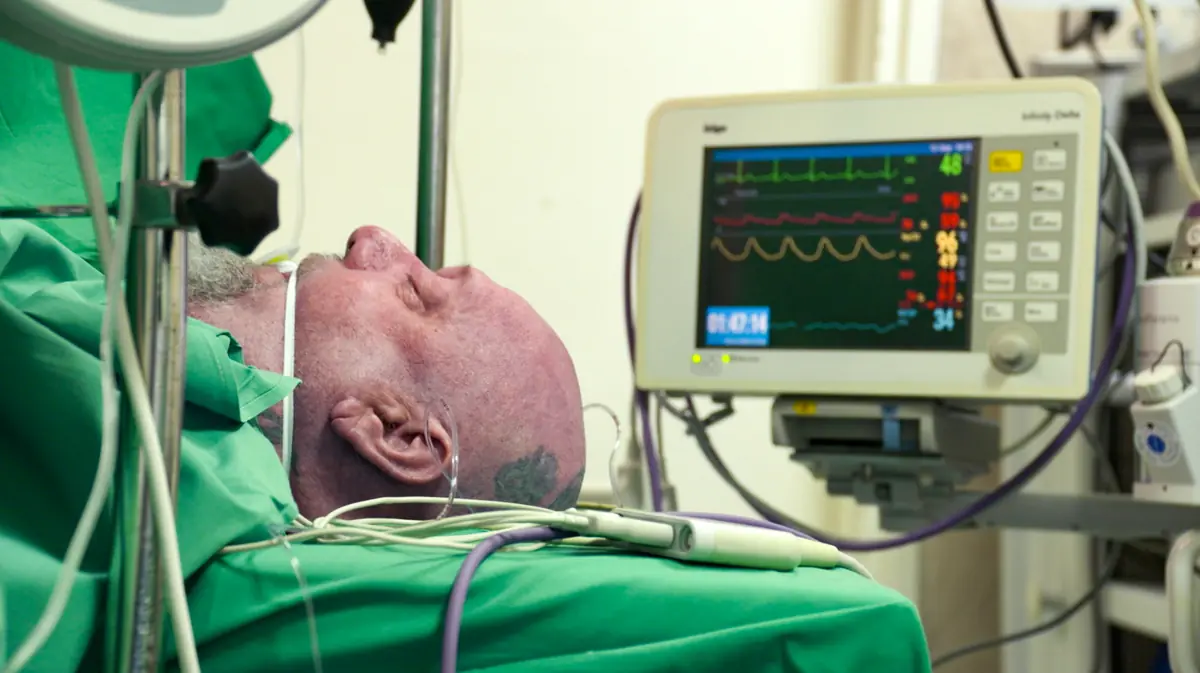
Has there ever been such a film of a musician who is as beloved as Paul, who has a secure place in music history, to reveal as much about himself and to go through the things that he is going through in this film? “I’m absolutely not trying to pat myself on the back,” Wes says, “but I wanted to do something different and special, and Paul was on board for that.”
Wes says that during one journey for physical therapy, Paul said to him, “And then on Monday, you’re going to leave.” For Wes, this was Paul letting him know how lonely he was.
His flat in Salisbury may have been full of problems, but at least that was his space. Paul was staying in Croatia in a building which was partially hospice care, part nursing home.
“I can understand the despair and loneliness,” Wes says. “He’s in this little box of a room, but, at the same time, Paul was getting regular people walking into that room, taking care of him. It’s this weird kind of juxtaposition of regular contact with another human being, but loneliness at the same time.”
During the film, you find out when Paul sold his publishing rights to those two Iron Maiden albums, and how grunge curtailed the Killers project. Even before his health problems, Paul’s life seemed blighted a bit by wrong decisions or unfortunate timing. “He shot himself in the foot time and time again,” Wes says.

It had been over 30 years since Paul Di’Anno and Steve Harris last stood in the same room. “God bless the lax security in Zagreb,” Wes says, as he and Kastro did not have passes and just entered, pushing Paul. To not risk missing the moment, Wes filmed on his phone, and the camera remained in his bag.
“There’s distance there, and they don’t have a lot to say to each other because they’ve become strangers,” Wes says. “But if you just watch the moment when Steve sees him, it’s all about that moment. All the stored-up love is right there. You can see it in his face. Steve’s not a guy of many words. He’s a quiet guy. But you see the emotion, and I love seeing that.”
Wes is happy how welcoming Kastro and Stjepan were. “This is what I needed,” Wes says. “This is what was going to make the film unique and special and worth finishing and doing. I can’t deny there’s hard stuff to watch.”

There may be a sliding door moment in the film. If Paul had been willing to go back to Croatia, the outcome may have been different. The final interview, when Paul was so full of optimism, he was with Yasmina in the new care home that he had to move to. “I have to tell you, when I walked in there, man, I’ll never forget the taste that hit my tongue,” Wes says.
“There was a smell, and it was a windowless hallway in a sort of Cold War-era building. It was such an odd thing.” The other side of the wall to Paul’s room was a wailing, dying woman. How can you stay positive with this?
“He was reluctant to go back and be in that situation again,” Wes says. “So when he was in Brazil, playing for fans, it might have been his favourite country to play because the reactions are so big, the crowds are so passionate. He was so happy to be on the road.
“Day to day, can you imagine being in this little box for months on end, focused on your health and only focused on your health, to then be able to play gigs? He wasn’t in good shape playing those gigs, but at least he was playing, and he was meeting fans. He was happy.”

At the end of the day, Paul was a prisoner of his wheelchair, and thus it is a tragic story. “I started the film not knowing that much about Paul,” Wes says. “I want people to acknowledge his place in history, to recognise that he had an impact and that he matters. I think that’s the most important thing.
“Shooting the film the way I did, including the parts that I did. I wanted people to feel for him. I wanted people to really understand instead of talking about what he’s going through. I showed you. That was the strategy.”
Wes describes the Lemmy film as a popcorn movie, and some want that when it deals with their hero, nostalgia and songs that carve a place in their life.
“If this film makes people wince and struggle with it, I think I’m happier that I made that than just the talking heads forgettable film that makes you feel nothing.”
Di’Anno: Iron Maiden’s Lost Singer will carve your feelings into pieces.