Heavy Metal’s Big Four by Daniel Bukszpan may come in at under 200 pages but hits with the force of a Dave Lombardo drum fill. A wonderful chronicle of a Metal-thrashing mad decade, equal parts light-hearted, glossy, coffee-table picture book and serious analysis, the volume is reassuringly weighty and a treasured item without opening a page.
Daniel Bukszpan, the author, is an accomplished musician, veteran band member, journalist and writer who has also published books covering Ozzy, Iron Maiden and Rush amongst others. He is held in such high regard as a talented writer that he was entrusted with writing the essay explaining the importance of Master Of Puppets, deposited with the album at the National Recording Registry in the Library of Congress in the USA.
The front and back cover are a band’s tour case, monochromatic, with contrasting shades of black, grey and silver tones, but with splashes of colour provided by stickers with the author’s name and the subtitle How Metallica, Megadeth, Anthrax and Slayer Reshaped Metal.
The back cover explains further that it is the story of Thrash metal, told through the interweaving histories of the bands that spawned it. The focus is on the founders of the genre, by general consensus, the Big Four. It is “heavily illustrated with concert and offstage photography as well as a selection of period memorabilia”.
The chapters are based around the years 1981 to 1992 and can as easily be binged straight through or dipped into depending on which pivotal year you are interested in. The text is punchy, flowing, easy to read, never dumbs down but equally never slips into highfalutin’ academic snoozeville.

Whilst beginning the story of the Big Four in 1981 makes sense, it is somewhat controversial to end their story in 1992. This decade was certainly when thrash peaked before other forms of metal and music, such as grunge and techno, distracted headbangers’ attention, but the Big Four survived the ’90s wilderness years and reigned supreme again, even to the present day.
If you have read or seen the film about Mötley Crüe, you will know what I mean when I say that this is not The Dirt. It does not sensationalise, and it is not full of lurid tales of drugs and debauchery. Rockstar lifestyle is acknowledged, but this is about the music and the bands.
Ample material is available in this vein, such as Mustaine’s absorbing and shocking autobiography A Life In Metal, so Bukszpan’s decision is a welcome one.
What is done expertly is to cover each of the Big Four equitably, fairly and accurately, including formation, contributions of individual members, the bands’ friendships and rivalries, essential recordings, touchstone tours and shows.
However, for me, what it really brought out is how much the interactions and competition between the Big Four drove them to unprecedented heights. Like fantastic sports stars, the fact that there were rivals worthy of the names kept them at the top of the game.
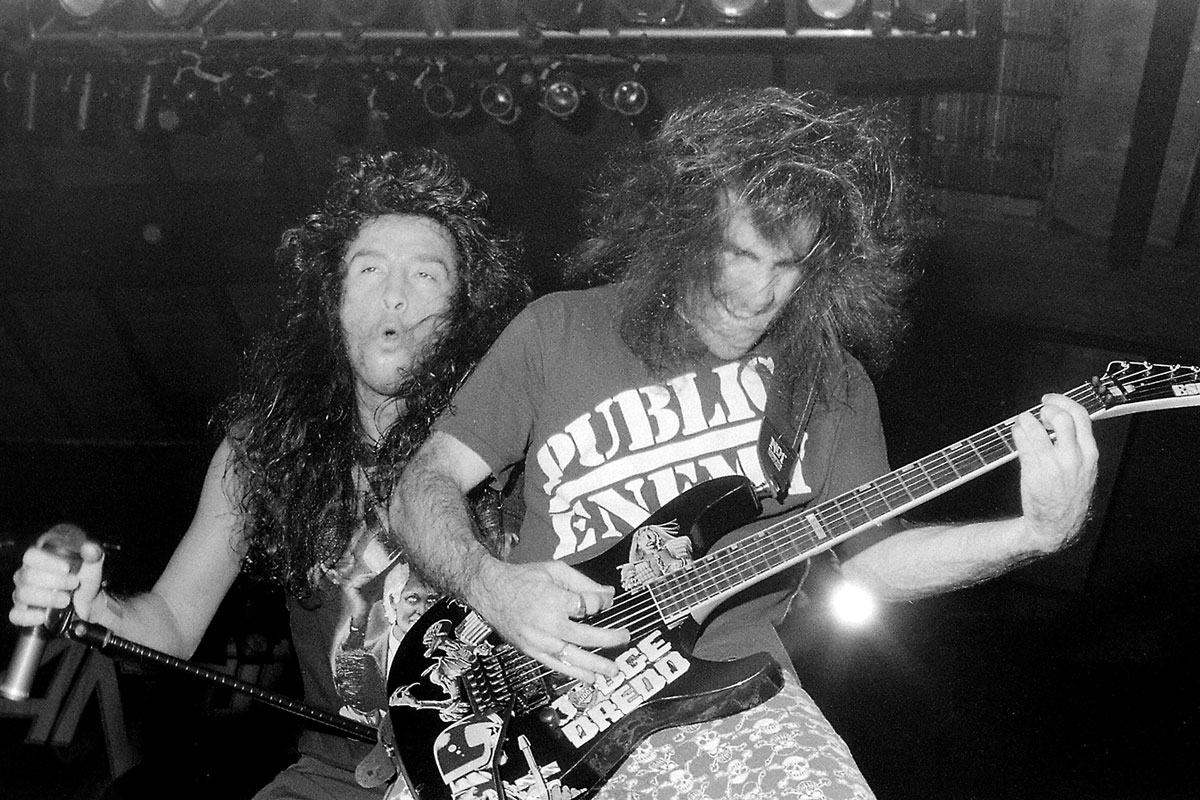
From Metallica and Anthrax’s friendship in New York in the early ’80s, though Dave Mustaine’s famous dumping from Metallica enraged him sufficiently to create Megadeth as a rival to them, to Slayer driving themselves to play faster in response to the San Francisco Thrash scene. Rivalry was not just a drama. It was the engine of the era.
The text excels in musical criticism of each of the influential Big Four albums. This includes the Garage Days EP and, to me tangentially, Speak English Or Die by Stormtroopers Of Death. This choice as a Big Four album makes sense in the context Bukszpan gives it.
The reviews show technical know-how that would make any musician happy to read, and they are incisive and unafraid to buck conventional thinking. The writer never holds back with praise and does not pull his punches with criticism.
I found his bravery liberating and validating, crystallising thoughts I had held for decades, which can verge on Thrash Metal sacrilege at times. It is not usual to find two songs on Anthrax’s Persistence Of Time described as a “fourteen minute roadblock to the rest of the album” or asserting that the second side of Ride The Lightning “loses steam” (it does) but is rescued by Creeping Death.
One quibble is that Bukszpan dismisses the song Liar from Megadeth’s album So Far, So Good… So What! as a stinker, which I think is dead wrong. Thrash was built on anger and aggression, and Mustaine unleashing his fury is cathartic Thrash at its most venomous.
However, the impact on Chris Poland (a Megadeth lead guitarist mainly known for the Killing Is My Business / Peace Sells era), who the song was written about, cannot be quantified and certainly not lauded since there is a lot of doubt about the truth of the lyrics.
Poland’s soon-to-be-released book Now Leaving Metalopolis promises to be incendiary as a result.

Bukszpan is adept at unearthing gold for die-hard fans. Only the most expert of experts on the Big Four will not find new information. Frank Bello being Charlie Benante’s nephew? Scott Ian refusing to play on Anthrax’s cover of Alice Cooper’s I’m Eighteen because he did not think it was up to scratch? Or the hilarious revelation that Slayer’s Live Undead album was recorded in front of barely a dozen people, complete with blatantly studio-dubbed chants of “Slayerrrrr”. There are many of these insights.
At no time should the amount of fascinating detail deter those new to learning about the ’80s and early ’90s Thrash scene, as there is enough background to understand without getting dull to those who lived through it.
Capturing the essence of the era pictorially and in words, patching battle jackets with band logos, reading ‘zines (fan magazines), tape trading and the sheer dogged determination it took to be a fan in those days just to find out about bands and gigs. Beyond the bands, Thrash and long hair, Bukszpan captures the creation of youth culture, individual identity and the Metal family.
It is also essential reading in that it takes you back to albums you thought you knew so well and makes you look at them again in a new light. At other times, it points you in new directions to albums that you might have missed, Dragon Kisses by maybe Megadeth’s most famous lead guitarist, Marty Friedman, being one that jumped out at me.

There are laugh-out-loud moments, from the opening photo of Scotty “Notty” Ian mid-jump at an Anthrax gig, to tales of tours going wrong, including the Cushion Riot at a Slayer concert attended by the author.
This is serious material by a clever man with a passion for the genre but never forgets that it is there to entertain as much as to tell a story.
There is thorough explanation of the bands surrounding the Big Four which underpinned their development. Despite having an interest in punk, I never had Discharge on my bingo card as one of the prototypes of Thrash. But the author is obviously correct when you listen back to what they were producing and the years they were producing it.
Where I would have liked more explanation beyond general consensus is why the Big Four became known as such, and who came up with the moniker “Big Four” and when.
Yes, they are giants of Thrash, but bands like Suicidal Tendencies, Death Angel, Kreator, Testament, Overkill, Flotsam and Jetsam and others could easily have replaced Anthrax and Megadeth.
Admittedly, Master Of Puppets and Reign In Blood leave Metallica and Slayer pretty well unassailable as the Top Two. The name Big Four must have sprung from somewhere? A journalist’s article, perhaps. Is it backed up by facts? Longevity, record sales, consistent quality, groundbreaking tours?
Whilst it was not immediately obvious to me from reading, I understand record sales were the defining factor. Anyway, the argument about what makes the Best Four Thrash bands will continue to rage in Metal bars forever.
This is a book of great quality, capturing aspects of the youth culture, identity and community of Thrash Metal and masterfully interweaving the stories of the bands.
It is well-balanced between the competing claims to positions in the history of Thrash Metal and something that will evoke memories that will make you and your friends smile and laugh with nostalgia about those crazy days if you were there.
And curiosity to explore what happened if you were not.
HEAVY METAL’S BIG FOUR: How Metallica, Anthrax, Slayer, and Megadeth Transformed Metal by Daniel Bukszpan is available from 10 November 2026. Pre-orders are available from geni.us/HeavyMetalsBigFour.