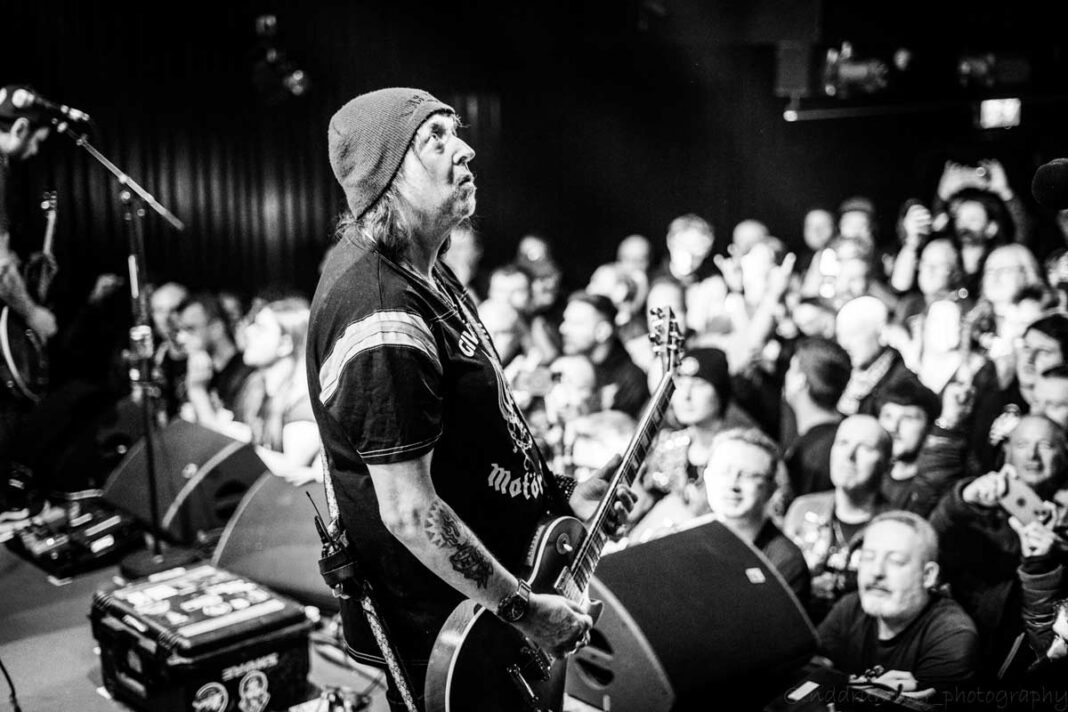
It has been a tough few months for Phil Campbell’s Bastard Sons. Phil’s unexpected passing in March not only caused the natural challenges of grief for a parent but also threw their entire future into a chaotic haze. How do you manage to deal with everything and continue? I caught up with drummer Dane Campbell to find out how the family are coping, their plans going forward and the legacy of their father.
Asked how it feels to be “getting back on the horse”, the response is cautious but determined. “Certainly trying,” Dane says. “What we’ve experienced so far is that most people seem really happy that we’re continuing the band, in terms of our big super fans and people who regularly engage and come to see us, which is amazing. They want to support us.”
That support, however, sits alongside a more uncertain reality. He admits that the band may have “lost maybe some of the more casual fans that may have come to see us play a load of Motörhead songs… with dad in the band”, adding that social media algorithms can be “quite selective with who they choose to show things to.”
The upcoming July and August dates, Dane says, were put together quickly and are “maybe not in our strongest markets.”
“It’s not looking brilliant,” he says of ticket sales, “but we’ve got a few weeks now to draw up the interest.”

Our conversation turns to the strange split in live music with stadium shows selling out while smaller venues and festivals struggle. Having just spent time with Metallica’s shows in Cardiff and London, as well as the final of grassroots Metal 2 The Masses, it is particularly apt.
“I think there are a few things,” Dane says. “Just the cost of going out might be a big thing for some people. Maybe they can only really justify one or two nights a month, if that.”
He points to the way major events can become irresistible. “People are paying 100-odd pounds to see Metallica, which is a must-go event,” he says, recalling one friend who paid close to “500 pounds for the snake pit thing” and still felt it was “a completely surreal, unique experience.”
But that does not automatically translate into people paying £20 or £25 to see a smaller touring band.
There are practical pressures too, travel, beer, transport, babysitters and the sheer number of competing summer events. “For me, I did three shows in one week, which is madness for me. There were a few others I would have liked to have gone to. But it was the cost and babysitters, things like that at my age. I can only do it so much.”
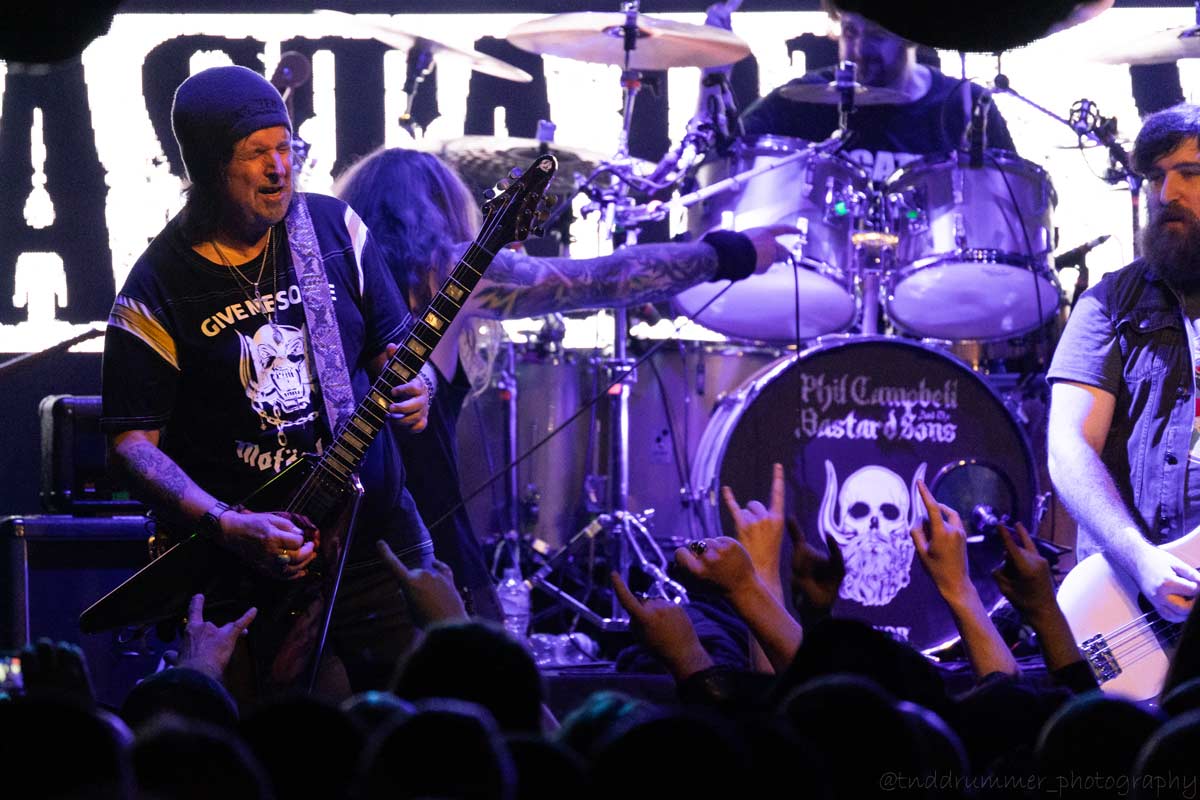
I am conscious that the decision to carry on as Phil Campbell’s Bastard Sons must have been a huge one. Was there a pivotal moment when the family decided the band should continue?
“My mum 100% wants us to try and carry on,” he says. “I don’t think there was really a discussion there. I don’t think she would have ever wanted us to not try”.
Maybe I misjudged the question a little, though, for it is clear that the decision sat with him and his brothers, Tyla and Todd.
The timing was complicated by existing commitments. “We had shows booked essentially,” he explains, including Judas Priest support slots and Bob Fest in Germany. Their agent offered to contact promoters and ask whether they still wanted the band “as just you guys.”
Thankfully, some did. Perhaps unsurprisingly, others did not. “There were definitely two or three festivals we had in the diary, and unfortunately, they were no longer interested in booking us,” Dane explains. “That was a bit of a downer, but kind of expected.”
Some festivals wanted to reduce the fee, and the band have had to cut back on crew to make the summer financially viable. “It’s only going to be just about,” he admits. “But hopefully it’ll be worth it.”
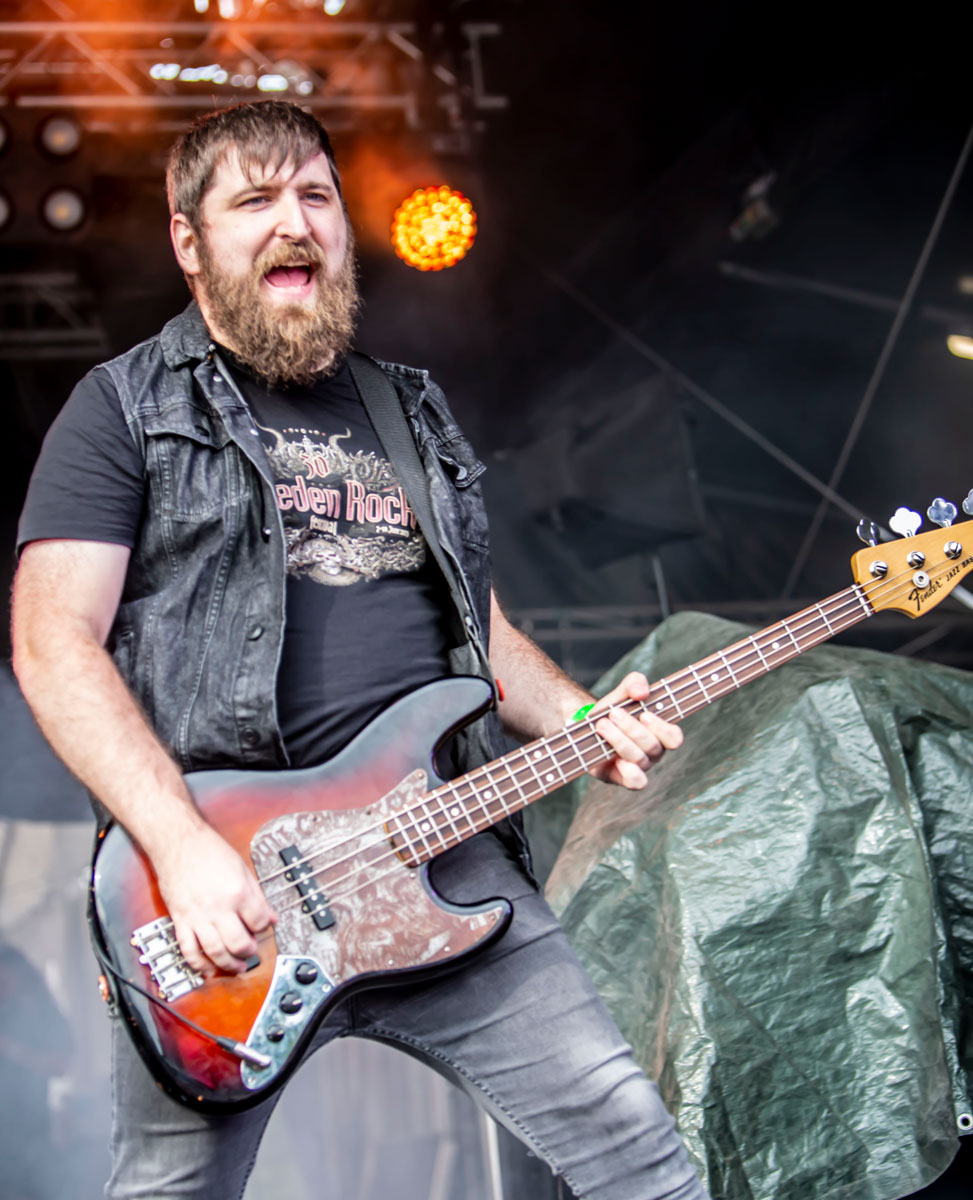
Although their father was inevitably the focus for many people, the band have built their own following over the years. “Our fan base has kind of got to know our personalities and appreciate us as a full band,” Dane tells me.
“I realise initially people just discovered us through our dad. But I have spoken to people who got into us, whether it was maybe a festival or a support slot, who weren’t necessarily Motörhead fans. They just liked the music as well.”
On top of everything else, having known the band for some years now, they are genuinely great people.
For me, the return of Julian Jenkins from Fury to sing with the band is great news. His shows with the band in Autumn 2025 showed that JJ could cover it, although that was a mainly Motörhead set.

Dane tells me that the immediate plan is to return to the band’s own material rather than lean too heavily on Motörhead. “This tour specifically, we’ve only had one rehearsal up to this point,” he says. “It’s going to be mainly [the band’s] songs. I think maybe a track off Old Lions Still Roar, and then a few, maybe a handful of Motörhead songs that my dad wrote.”
We have a great debate about whether one song under consideration is Ace Of Spades, partly because of what it means to audiences. “Maybe Ace Of Spades, just to keep those people who want to hear it happy,” Dane adds.
But he also asks the question directly. Would people expect to hear it? It’s an interesting point. Does it turn the band into a tribute act?
The subject clearly matters. Last year’s full Motörhead sets were partly an experiment, encouraged by outside interest and the band’s awareness of the 50th anniversary. “I didn’t really want to do it,” Dane tells me, “But there seemed to be more interest in doing it for that particular year, and we were like, well, why not?”
Now, though, the priority is clear. “I miss playing our own songs now,” he says. “I didn’t write any of them [Motörhead songs]. I like playing songs I wrote and came up with, and it’s just more satisfying as a musician playing your own material.”
Dane is keen to draw a distinction between honouring a legacy and becoming a tribute act. “We never really wanted to go down that tribute route or be known as a tribute band,” he says. “I’m not a tribute band. We’re not dressing up as another band.
“This is a different kind of thing. We write our own music, and we will be playing our own music from now on, with maybe a few nods to songs that we know the fans like that my dad wrote.”

For now, JJ is not expected to take on rhythm guitar as well as vocals. “I don’t think at this stage,” he says. “It’s quite a lot to really ask of him right now.”
The band will assess how the songs feel through a full PA and with their sound engineer before deciding whether any songs “would noticeably benefit from having the second guitar.”
On JJ’s voice, we are both positive. “He’s got a good range,” Dane says. “He’s got that higher register, but he’s still got that kind of gravelliness to his voice if he wants it, which is kind of what we’ve always been associated with.”
It was good to hear that the first rehearsal went better than expected, even if the schedule sounds alarming from the outside. “It went really well,” Dane says. “Considering it was just a one-off… we’re not going to rehearse again now till the day before that festival. And that’ll be it.”
I was initially horrified at this casual approach, but Dane tells me that the approach is not new. “We’ve always kind of been that kind of band,” he says. “When it comes to getting a set ready for playing live, it’s pretty much always been a quick rehearsal before a tour starts. We sync together well musically, me and my brothers. Obviously, when my dad was involved, it was just easy.”
There is, he laughs, a caveat. “I wouldn’t recommend it, but we’ve been able to get away with that for years.”

When the conversation turns to the response after his father’s death, Dane pauses on the strange collision between private grief and public loss.
“It’s lovely to read all the comments,” he says. “There were a lot of tears shed, especially at the very early stages, because it was tricky.”
The family also felt pressure to announce the news before it spread elsewhere. “We really wanted to do the announcement ourselves, which is not something you’d normally really need to do if your old man passed away,” he says. “The morning after… even though I felt like absolute [awful], I was trying to write a little paragraph for social media. This is [hard].”
The messages mattered, even if they could not soften the loss. “Beautiful comments, people from everywhere… It’s lovely you feel that way. But it doesn’t make it any easier,” he says. “If anyone goes through and reads the comments, they’re all very consistent about the type of person he was. It’s nice to know my dad was well-liked, and I kind of knew he was, anyway, I guess. But yeah, wish I had him a bit longer.”
Of the shows ahead, Chepstow Castle carries special weight. “We’re really happy that that’s going ahead,” he says, noting that it is now being marketed more as a celebration. “That’s the one I’m most looking forward to.”
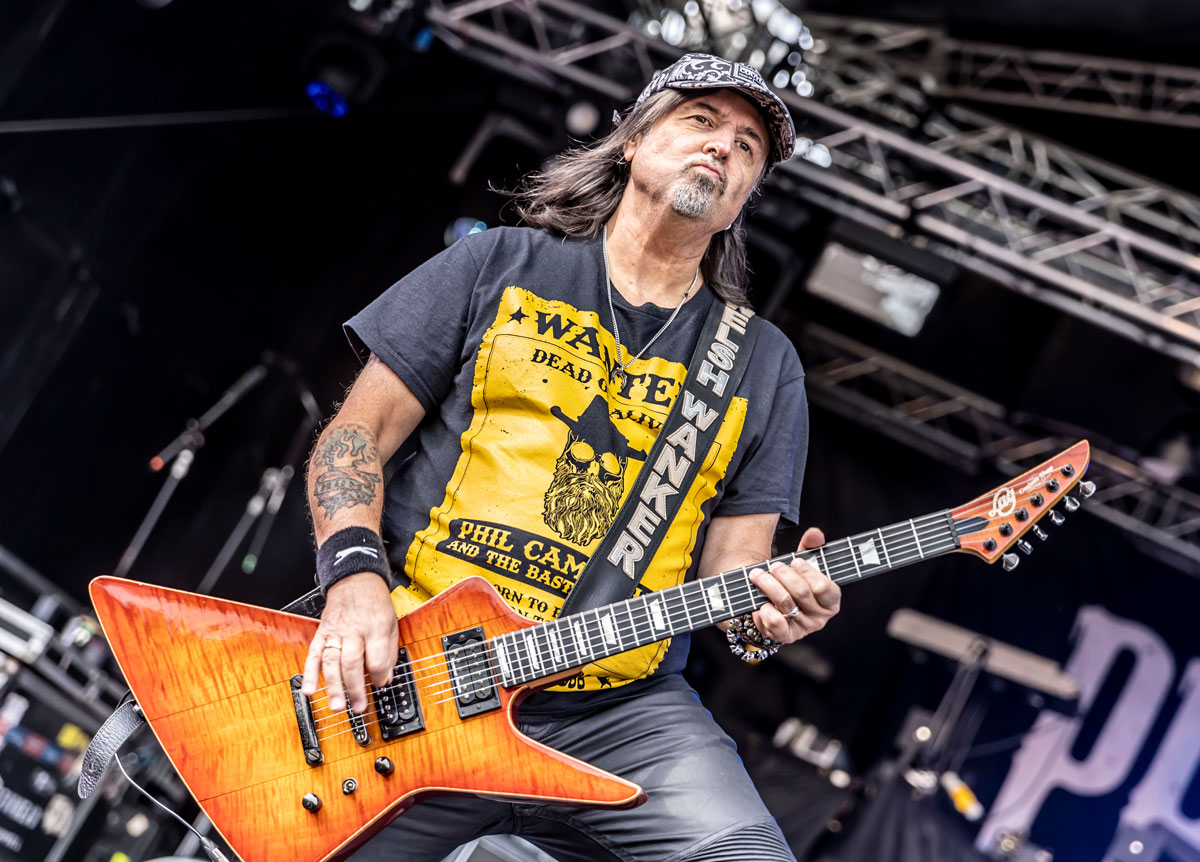
The Judas Priest dates matter too, partly because opportunities like that may not come again. “We don’t know what the future holds,” Dane says. “This might be the last arena shows we ever play. We don’t know.”
For now, the plan is simply to get through the summer and see what happens. “I’d like to do some more of the UK, maybe experiment with some smaller shows,” he says. “But we don’t really know. Let’s just get this summer out of the way and see what the response is, and emotionally as well.
“Musically, we can play the shows. But emotionally, how will we feel hitting the stage? I don’t know yet.”
Phil Campbell’s Bastard Sons play Maid Of Stone Festival on 18 July 2026, The Booking Hall, Dover, on 23 July 2026, Chepstow Castle on 22 August 2026 and Hella Rock Festival on 5 September. For full dates, including European shows, and ticket links, visit philcampbell.net.