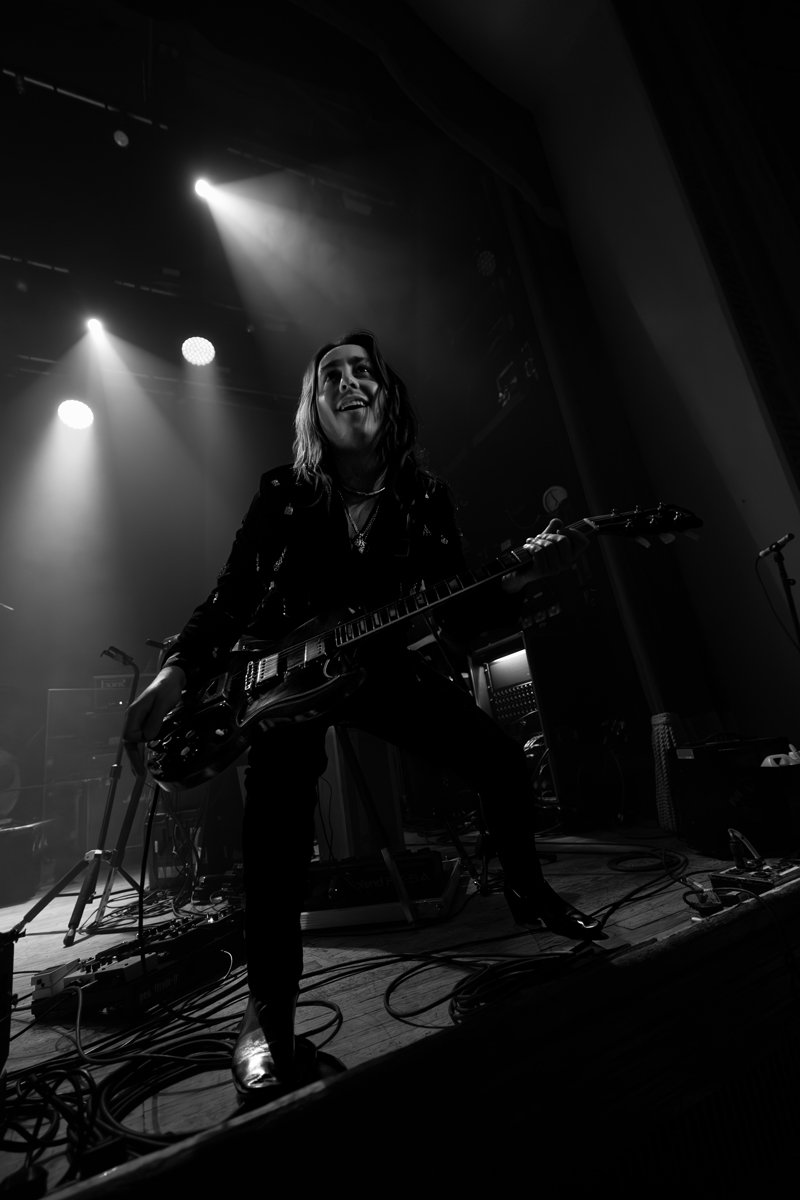
In conversation with Mirador, who treated Islington Assembly Hall, London, to an electrifying, mesmerising and hypnotic performance, brightening up a dark November night.
Side projects can be interesting beasts. Sometimes it is a practical way of paying bills. Sometimes they are a vehicle for self-indulgence, or a way for fans to prove who is the most devoted at trivia quizzes up and down the land, the music and message very much in the background.
Now and then, thankfully, there are side projects that gleam with promise, that tap into something very special. Fortunately, this is the category where Mirador firmly belongs.
Interest was piqued from the beginning when the self-titled album was first announced. Jake Kiska, axeman for flamboyant Michigan rockers Greta Van Fleet, combined with English singer-songwriter Chris Turpin, part of indie rockers Ida Mae (along with wife Stephanie Ward), previously of Kill It Kid.
Two differing guitarists and vocalists sharing the same space, exploring the music that had influenced them as artists, including blues and folk. That album was a revelation, heavy, rocking and magical, so the news that the quartet were going to tour met with huge anticipation.
There was a real buzz outside Islington Assembly Hall on the evening of the London date of the UK and Europe leg of the tour, starting hours before official door opening time. As the sun went down, queues gathered, notably female-heavy and younger than a typical blues rock crowd, determined to secure that all-important barrier position.
I settle down on the huge L-shaped sofa in the dressing room complex for an engaging and lively conversation with three of the band after soundcheck. No one knows where bass player Nick Pini is, but there is little concern, as apparently “he’s an enigma.”
The last few months have been quite the whirlwind for the band, a bonus result of the friendship and musical partnership that naturally developed between Kiszka and Turpin, a kinship formed quickly after Ida Mae supported Greta Van Fleet.
“It was interesting because I remember, once upon a time, Ida Mae came across my gaze,” Jake Kiska says, “and it was like he was in a tower overlooking the eastern gates of Europe. Anyway, I digress, but we’ve always been so involved with selecting our openers, and I was blown away by Ida Mae.
“I went to the guys, and I said, ‘You have no choice, Ida Mae is going to open for Greta on this run, ‘ and it was incredible. So much of the stuff that Chris and Steph were doing was pulling from a similar well that I and my brothers had come from.
“Being a guitar player, watching Chris initially was inspiring. On that tour, one thing led to another, throwing around guitar ideas and riffs and licks and history and stories and influences and playing guitar and drinking wine until four in the morning on the bus, and jamming and howling at the moon and that sort of thing.”
The formation of the band thus came out of this organic approach, not a calculated move. Once the realisation hit that the emerging songs needed to be unleashed to a wider audience, the challenge was to find fellow musicians on the same wavelength.
Gold was struck with UK-based Australian drummer Mikey Sorbello (formerly of The Graveltones) and crack session bass player Nick Pini.
“In the infancy of Mirador, there was a lot of material that Chris and I had constructed, and it was pretty ambitious”, Jake reflects. “At some point, it was time to do something a bit more formative with what we’re doing. Maybe this isn’t just the two of us.
“The music is requiring more, so the mission at that point was to find a rhythm section that not only holds this thing up but can contribute to it and take it further. After a lot of waxing and waning, it was very obvious that Nick and Mikey would have to be the ones, and they both said yes – so lucky us.”
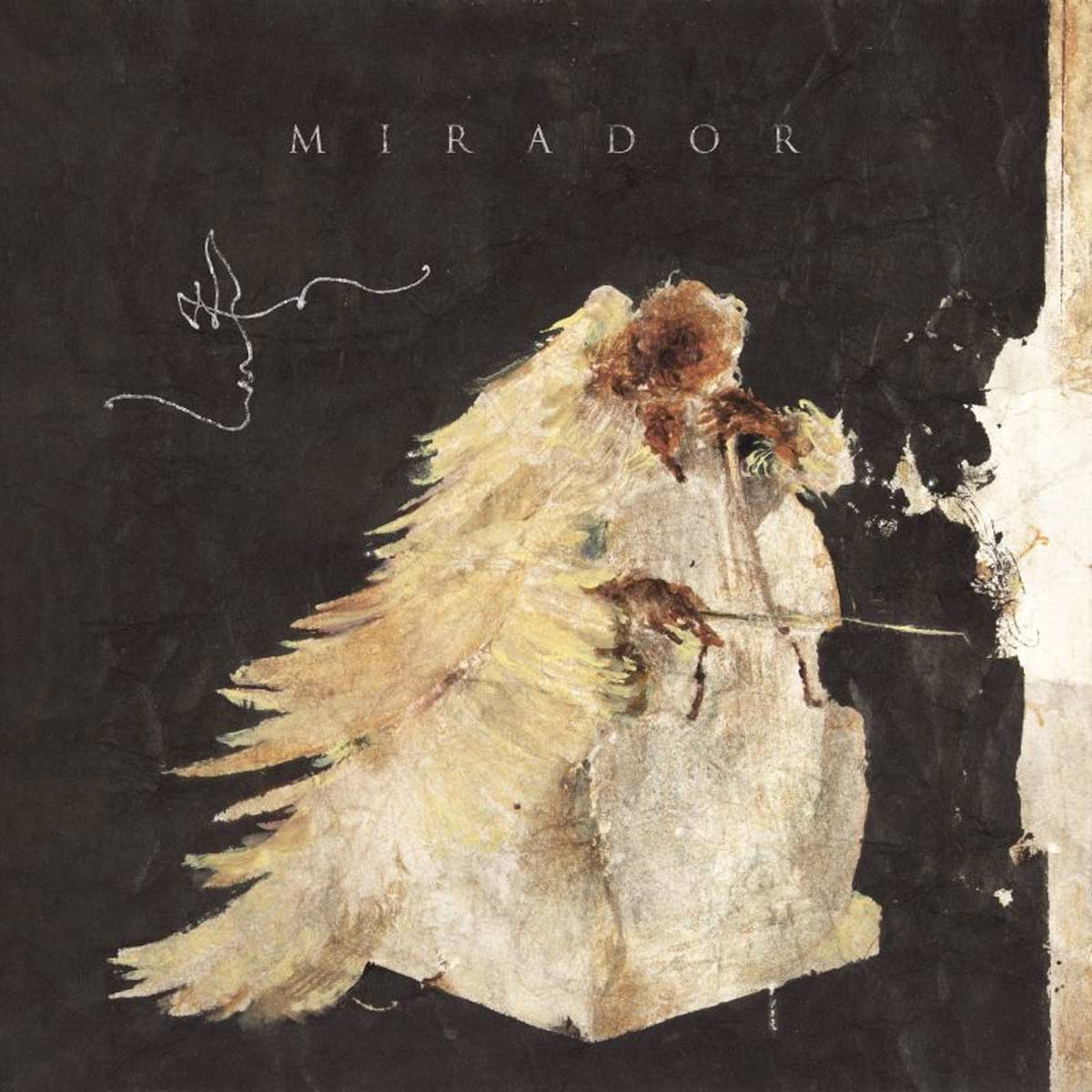
The album was recorded in Savannah, Georgia, from mainly live takes and no click tracks and sprang onto the world with no long pre-marketing campaign or agenda.
“It’s been kind of overwhelming,” Jake admits, recalling the response to the album and shows. “We had no idea what the response was going to be. The sound was immediate, and so much of it was organically created, we took the course of least resistance.”
“We opened for Greta on one of their runs,” Chris Turpin says. “That’s how we announced the band. Then we did two small tours across the US, and it was almost like Deadheads following a band around because all the fans would follow.
“They would wait from like eight in the morning in Nashville. They camped out, they started to share lyrics and song titles and scraps of information, so by the time the record came out, it was really exciting for people to have been a part of that process, which you don’t really get much of a chance to do anymore.”

Of course, there is a built-in audience from their respective fanbases, especially Greta Van Fleet, who have been playing large arena tours for some time now, so it would be naïve to ignore that.
The thing is, getting people through the door is one thing, but it is down to the act to keep people interested and genuinely move them, which is happening, and this is the key to their overall success.
For Mirador, the blues is not just a genre, it is a shared obsession, a magical thread running through their music and their lives. “What impacted me the most earliest was blues music, American blues music,” Jake confirms.
“We both had this strange, drawn obsession to early blues music, which is a traditional ingredient of rock and roll,” adds Chris. “What electric blues is now is a style I don’t really recognise as being blues, I’ll be honest. The early country blues, people like Blind Willie McTell and Fred McDowell, we’re both really attracted to. It’s quite rare that people have had that sort of immersion from a young age or became just wildly, oddly, strangely obsessed with it like we are.”
But the blues was not always an easy fit for Mikey. “I fought the blues,” he says. “I really did not want any part of it… But for some reason, the shuffles and the swings just kind of naturally flowed. After fighting it, I have this stronger love for it now. It’s something that came for me, in the sense that it was kind of written in the way I’ve approached music already.”

Although staying true to the origins of the blues, Mirador put on a thoroughly modern blues-rock show, heavy, intense, with huge elements of uncertainty over which path will be taken on a given night. It is not just blues, it is mythology too.
Mirador’s music is steeped not only in blues and folk, but in myth and legend, with Jake stating that he is particularly drawn to the legends of the White Hart.
“I’ve been wildly obsessed with British folk and what that is doing at the moment,” says Chris, who grew up immersed in the contemporary sounds of acts such as Fairport Convention and Nick Drake.
“We were sharing old ballad books, because these are songs that were carried to America from Eastern Europe and all over, surviving as little pieces of Nordic poetry and all sorts of strange things. The idea being that these songs, through the distillation of time, still exist in some way – melodies, forms, shapes, words, lyrics, stories based on those old myths.
“Why don’t we do what everyone has done and re-adapt and pull them back to the fore, especially now with wild algorithmic clickbait nonsense where no one has any time to spend on anything?”

Jake confirms that, along with reverence for tradition, there is a real spirit of re-invention at play too, a necessary approach to keep the music alive and central.
“There’s so much tunnel vision in contemporary rock records,” he says. “Some of the philosophy in what rock ‘n’ roll could or should be for our generation. We were contemplating the future of rock ‘n’ roll, but what we did was the complete opposite: looking back, perhaps even further back, through the threads of influence that were the lineage of rock ‘n’ roll’s invention.
“We went back into the blues and folk, but also further into Native American music, African tribal music, Sufi music of India, Eastern European music, and Nordic, Celtic, and Hungarian folk music.”

It will come as no surprise that with this background, Mirador’s songs are living things, evolving with every performance.
When asked if the songs have changed once touring, I am met with a huge laugh and a unanimous “Yes!” from all three. “The amount of evolution these songs have taken is crazy,” Jake says. “The majority of the record was written on two acoustic guitars in an old Victorian house in East Nashville.
“We played versions of the songs before recording them, then recorded them, and they changed again. Then we constructed the headlining set, and they changed for the fourth time – and then they change every night. It’s a shape-shifting thing as we go along.”

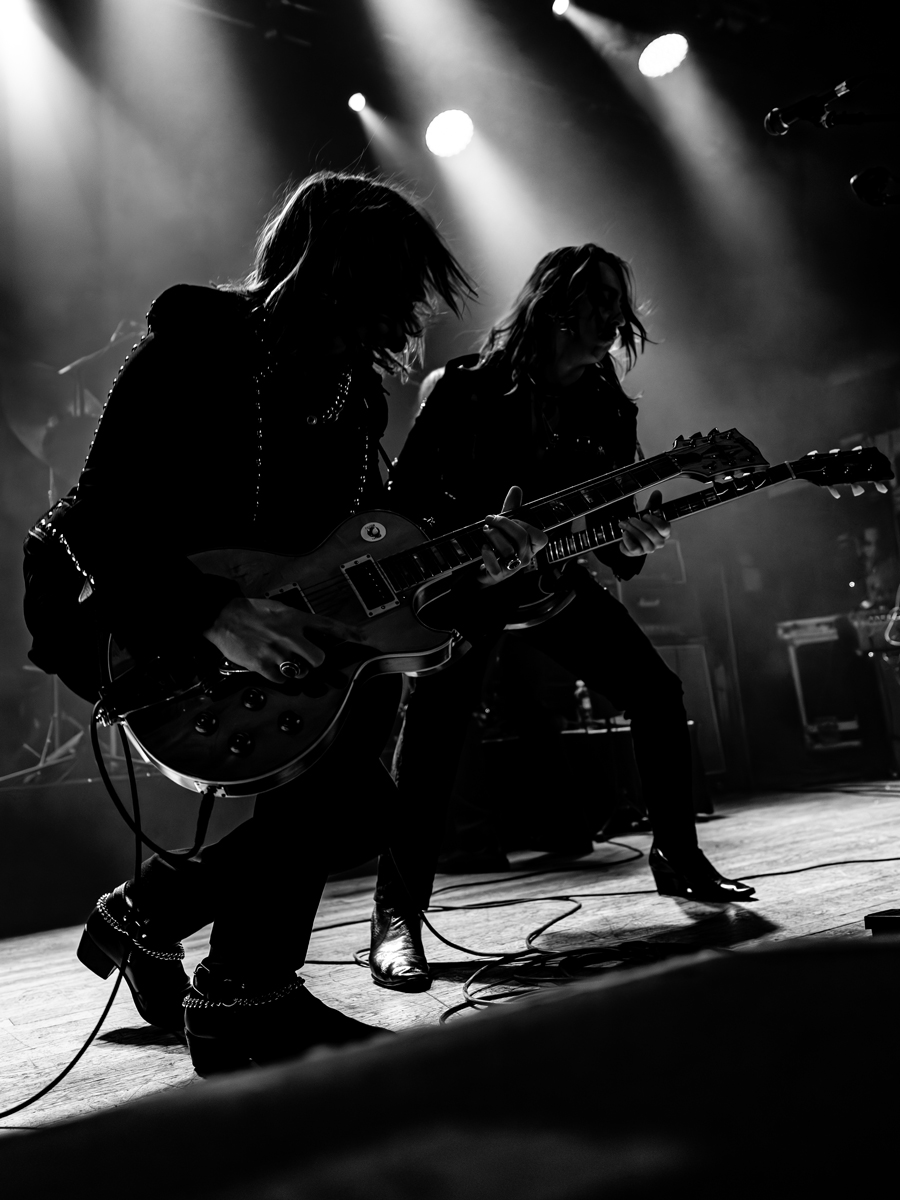
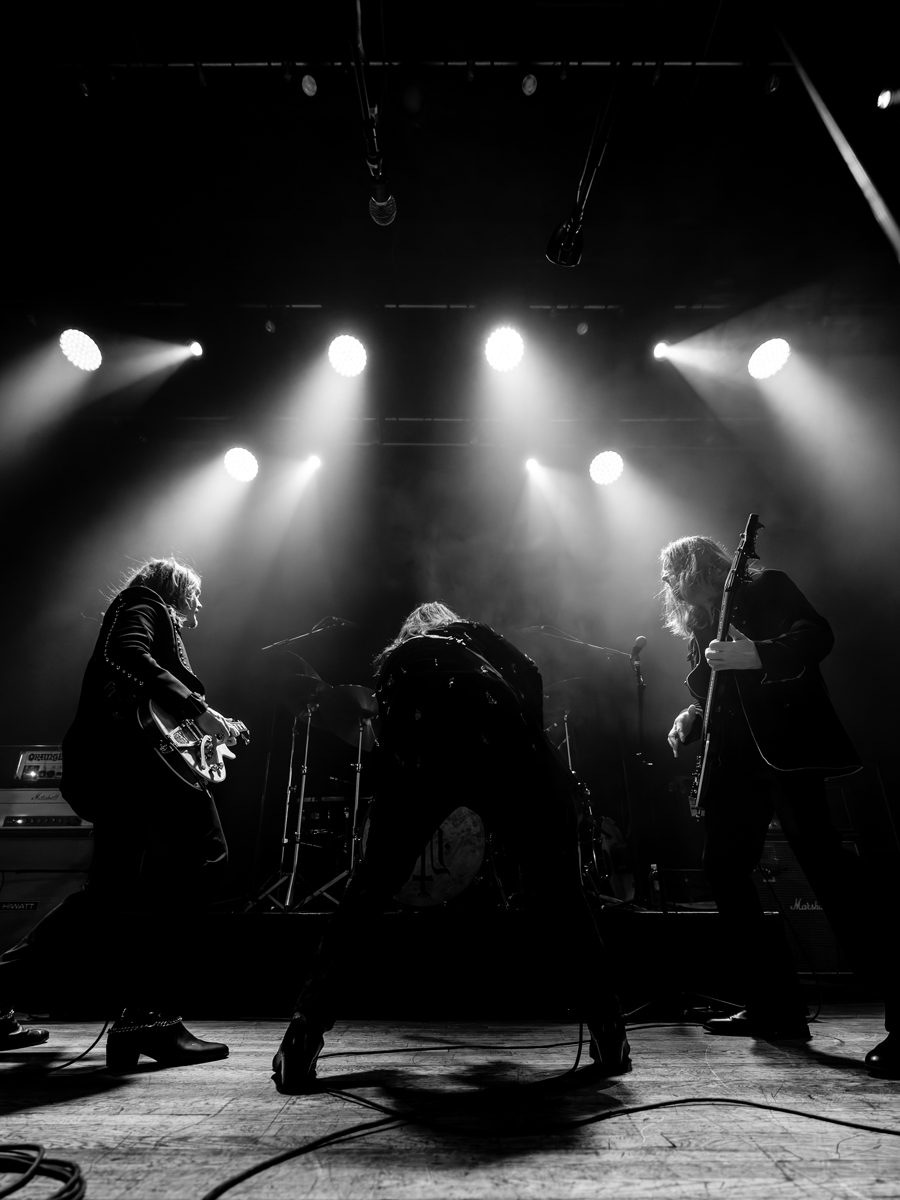
When the band took to the stage in Islington, the audience was kept captivated for a full two hours, comprising all the album tracks with no covers, yet it did not drag once. The band dynamics and telepathy were apparent and inspired, and the spirit of letting the music find its own way was to the fore.
The combination of Jake and Chris’s guitar playing and vocals was a dream, with neither outshining nor clashing with the other. Forget about over-long indulgent drum solos too, instead a genuinely innovative and striking “Syncopation Symphony” saw Pini and Sorbello trade rhythms in a way rarely seen.
For Mikey, who throughout the show could be seen hitting the drums with his trademark double drumsticks, tambourines and his hands, the opportunity to let his creativity lead is paying dividends. Earlier, he had said how much he preferred “anything that I can be myself, because as a drummer you get called to do a lot of things, but mostly I like to be myself, and that’s what this band allows.”
Afterwards, there was an air of genuine awe and reverence from those present, curious observers were converted, and the satisfaction of being present for something authentic, mystical, and so damn good was high.

Once the tour is over, Jake and Chris will return to their day job bands, but this is not the end of the road. They will return both enriched and determined to keep Mirador going. As Jake describes, “there’s a diffusion that happens musically when there’s a collision of friends and now brothers, new brothers and blood brothers. Maybe that has altered some of my approach, but it’s a synthesis.”
Chris agrees. “We both get to flex in a way that we cannot do in our other projects in this band. Mirador offers us something very different. Maybe some of that will filter back into our other bands. We wanted Mirador to have this very strong identity, which it did right from the off.”
This story will continue. The band themselves emphasised that Mirador is “definitely not a one off.”