A week after EDDFEST, I found myself thinking back to Friday afternoon, when the Podpads site first opened. I spoke with the team before taking a MetalWalk with Emily, who guided me through the accommodation field and explained how the site comes together. Even after the tents have been packed away, the rhythm of those days still feels present.
Festival accommodation has changed dramatically over the past two decades, and many guests now search for reliable glamping options that offer comfort, security and a calmer arrival experience. Podpads has become a familiar name for anyone looking for luxury festival stays at events such as EDDFEST, where demand for high‑quality bell tents and wooden units continues to grow.

The company’s story began with a simple idea at Glastonbury, and the approach behind the brand still shapes the way guests experience festival accommodation today.
Podpads began with a desire for a better Glastonbury weekend. Roland and Robbie, the company’s founders, arrived at the festival in 2005 and decided a tent no longer offered the comfort they wanted. They built a small wooden structure for themselves and brought the unit along the following year.
Crew members behind the stage noticed the design immediately. A lockable door, solid walls and a secure sleeping space created a level of comfort that canvas could not match. Interest grew quickly, and the pair returned the next summer with a pallet’s worth of units. Growth continued from that moment, shaped by a steady, family‑run approach that still defines the atmosphere on site.

Walking through the accommodation field at EDDFEST, the original idea feels present in every row. Luxe pads stand in neat formation, each one resembling a compact beach hut with wooden frames and simple interiors. Guests sleep in singles or doubles, and bunks are added for groups when needed.
Nearby sit the octopads, a hybrid design that combines wooden walls and lockable doors with a canvas roof. The result feels practical and warm, a blend of structure and softness that suits the festival environment.
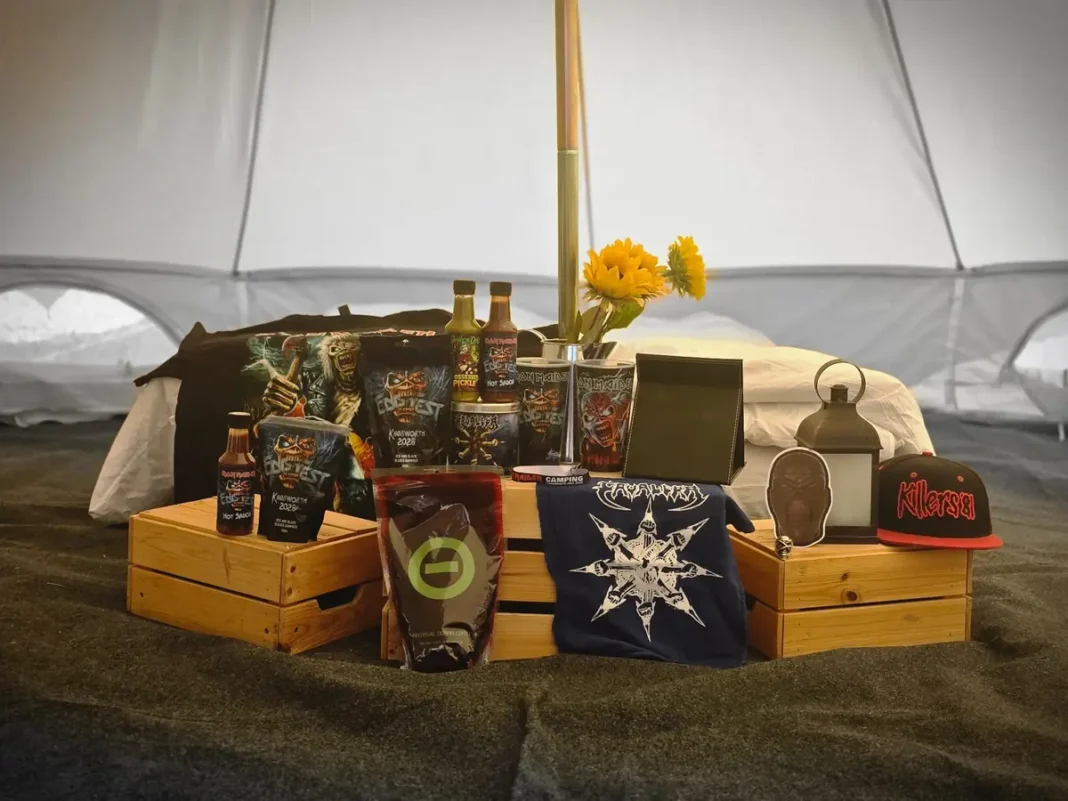
Further along are the safaris, long canvas tents that sleep six, and the classic five‑metre bell tents, which usually hold four guests. All wooden units come with power, while the tents rely on charging stations placed around the field. Those stations are new this season, created by Roland.
Tables, stools, mirrors and chairs in the pamper area were also built in‑house. Pre‑season involved a full upgrade, giving the entire site a refreshed and cohesive feel.
Sustainability plays a role in the build. Pallets left over from deliveries are reused whenever possible, although some projects require new materials. As Emily told me while we walked the rows, “We try to reuse whatever we can. It just makes sense when you’re building a whole village from scratch.”

EDDFEST’s scale is striking. A total of 356 accommodation units sit across the field, including 320 bell tents, 33 luxe pads and 3 octopads. Guest capacity reaches 820 once every space is filled.
The team builds the entire site in four days. Ground markings go down on Sunday, followed by three days of construction in heavy heat with barely a breeze. The crew works with calm precision and finishes on schedule every time. Take‑down is faster, beginning on Sunday and finishing by Wednesday.
Crew members live on site in a dedicated camp with a kitchen and a full‑time chef. Rosie leads the kitchen this season, preparing plant‑based meals chosen for environmental and ethical reasons as well as practicality.

Large festival sites often require long walks to reach crew catering, which can consume an entire break. As Emily put it, “If the kitchen’s close, people actually get a break. You don’t want to spend half your downtime walking across a site.” A kitchen placed beside the work area gives the team genuine rest. They receive three cooked meals a day, self‑serve breakfast, ice lollies delivered to the field and iced coffees during the hottest hours.
Despite the workload, crew members still enjoy time off. Reception duties take place over the weekend, including check‑ins, bag carrying, walking guests to their tents and making sure everyone slept well enough to enjoy the next night. Once those hours are complete, the team heads into the festival to see bands and relax.
Guests often mention how helpful the guided walk to their tent feels, especially after hauling bags through a busy site. Festivals can be confusing to navigate, and a friendly escort removes stress from the arrival experience.
The pamper station adds another thoughtful touch. Guests use hairdryers, straighteners and mirrors throughout the day, preparing for the festival in a shaded and comfortable space. New canopy tents make the area cooler and more spacious than previous seasons. Every piece of furniture inside was built by Roland, which gives the space a handmade character that guests appreciate.

Emily has worked with Podpads since 2023 and is now entering her fourth season. In her earlier years, she had winters off and spent that time travelling through Asia and Australia, but the role has since become year‑round. Winter months are quieter, focused on planning, followed by a full summer of events.
“It’s a strange cycle,” Emily said. “Winter’s quiet, then suddenly you’re building a village in four days.” The job feels unique and enjoyable, shaped by a sense of community and the satisfaction of watching the site grow from an empty field into a temporary village.
By Sunday morning, the field had settled into its own quiet rhythm. Guests looked better rested, moving slowly through the rows with coffees in hand, and the village Emily showed me on Friday felt lived‑in without ever losing its order.
Even as the festival wound down, the site stayed clean and steady, a small, comfortable corner of EDDFEST that gave people space to breathe before their journey home and the weekend came to an end.